




How the Classroom Shaped My Career
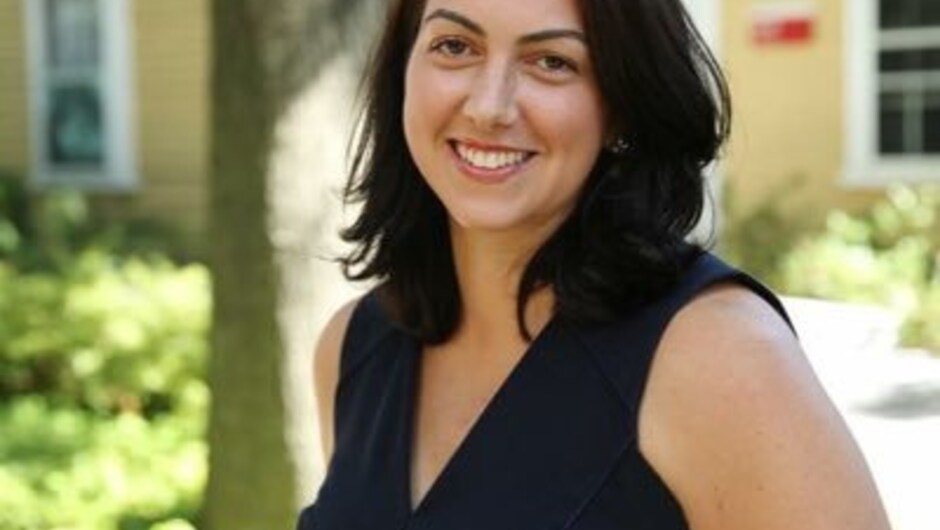
Lorea Barturen's career path took an unexpected turn when she got a firsthand look at the impact she could have as a teacher.

Lorea Barturen first got to see the everyday work, mission, and life of a Teach For America corps member through her roommate's experiences. After visiting her roommate's classroom, cheering for the marching band, and meeting other corps members, Lorea was ready for a career switch.
Lorea traded in her consulting job at Accenture and joined the 2009 corps. She taught high school Spanish in Colorado, an experience that would lead to a purpose-driven career as a brand manager at Starbucks.
She shares how this has experience shaped her career path.
What were some of the major lessons you learned during your time in the corps?
I learned how to fail fast and iterate. Turns out, this is how some of the most innovative companies structure themselves to adapt to changing market demands and consumer trends. I also learned to check my ego at the door. Like most people, students come to the classroom with all kinds of stressors and emotional experiences, and your job is to focus on their needs and help them.
What has your route been after the corps?
Since leaving the classroom, I have served as the director of talent at the Brooke Charter School Network through the Education Pioneers Analyst Fellowship, a program that offers hands-on training and experience for aspiring education leaders. I earned my M.B.A. from the Tuck School of Business at Dartmouth, and just celebrated my five-year anniversary at Starbucks, where I’m now a brand manager.
How do you use the skills and beliefs you developed in the corps?
I use the skills I developed in the corps in a variety of ways. For instance, from a communications perspective, I often lead cross-functional teams of people with diverging interests to achieve one shared goal.
Ready to launch a career with meaning?
Join a movement that's changing the future for America’s students.
Join the Corps
Amazon Engineer Turns Computer Science Teacher
Maggie Chapman left her engineering job to pursue a career of impact: teaching computer science to young learners. Now she’s working to improve students’ access to career opportunities in Idaho.

Maggie Chapman made a big decision in the spring of 2018.
She left her job as an engineer at Amazon, packed up her car, and moved from Boston to rural Idaho to begin a new career in the classroom, as a Teach For America corps member.
Maggie is originally from St. Louis and studied computer science at Tufts University. She landed a role at Amazon on a team that developed software used in fulfillment centers to help manage and fix equipment. While she enjoyed the fast pace, constant learning, and problem-solving, she felt that something was missing.
"I realized that I was much more passionate about education," Maggie says. "I wanted to increase equity and access to the technology field."
After joining corps, Maggie now teaches math and computer science at Caldwell High School in Idaho. A self-described nerd, she loves applying her technical experience and problem-solving skills in the classroom.
She also sees an urgent need for more computer science college graduates, especially those from rural communities. While students in more affluent schools are being taught computer science at a young age, students in low-income communities don't always have the same opportunities.
“A lack of access to computer science education is tied to the systematic poverty that our communities face," Maggie says. "Students are ill-equipped for modern-day jobs and industries because our schools are not able to adequately prepare them."
Motivated by a desire to close this gap for her students, Maggie created a day-long program called “Caldwell Codes,” with support from local tech experts. She invited panelists from HP, Micron, and Boise State University to share their experiences with students.
All of the panelists shared similar backgrounds to that of the 50 students who attended the event, including Juan Flores-Estrada, a first-generation Mexican-American who graduated from Caldwell High School in 2008 and now works at Micron.
Maggie says the most rewarding part of teaching is seeing her students realize that they are capable of learning anything. She wants her students to feel empowered to take charge of their education, and have access to future opportunities.
"I believe that every student has the right to a high-quality education," Maggie says. "I am passionate about being a part of the movement to realize that vision."
Ready to apply your professional skills in the classroom?
Join a movement that's changing the future for America’s students.
Join the Corps
Why I Joined Teach For America as a Professional
Four Teach for America alumni explain why they made the career change to join Teach for America and how their prior work experience helped them thrive in the classroom and beyond.
From Finance to Education Policy
Kaitlin Anderson (Mississippi Delta Region ’12)
Fellow in the Department of Education Reform and a Research Assistant in the Office for Education Policy at Michigan State
Before joining the corps, I worked in corporate finance, and while I enjoyed many aspects of my day-to-day work, I felt like something was missing. Two of my best friends from college had joined TFA, and I was compelled by their stories and proud of the work they were doing. Ultimately, it came down to knowing that I wanted a career where I could promote equitable communities, and working in education, and with TFA in particular, seemed like an ideal way to do so.
My corps experience was exciting, humbling, intense, and challenging. It was significant. I joined the Mississippi Delta Region in 2012 and taught high school math in a small town in rural Arkansas. I felt so privileged to be in a place that really valued community, and where teachers, leaders, and staff in the school were very supportive of us.
My professional experience most likely made me more confident as a classroom leader than I would have been otherwise. My background in finance, accounting, and economics gave me a tangible way to connect math to important real-life skills (like budgeting), but it also provided a way to teach students about potential career opportunities that require math.
After the corps, I earned a Ph.D. in education policy from the University of Arkansas at Fayetteville. I was able to conduct real research that was relevant for school leaders, educators, policymakers, and community stakeholders in Arkansas. After completing my Ph.D., I accepted a post-doctoral research associate position at Michigan State University, in a new, exciting research center called the Education Policy Innovation Collaborative (EPIC). There, I get to continue my work, conducting what we refer to as “Research with Consequence,” in partnership with the Michigan Department of Education.
Looking to Pay It Forward
Connor Nowalk (D.C. Region ’11)
Data and Strategy Manager at The Literacy Lab
I never intended to become a teacher, but I got hooked while I was working as a Literacy Lab tutor. The Literacy Lab is a full-time AmeriCorps program now, but at the time, I was tutoring students in the evening at DC General Family Shelter after working at an advertising company during the day. It didn't take long for me to realize which line I work I was more passionate about. When one of my students left the shelter with his family, I couldn’t stop thinking about the progress he could’ve made had we had more time together. Ashley Johnson (D.C. ’06), the co-founder of The Literacy Lab, encouraged me to become a teacher and to apply to TFA, and she helped me through the application process.
My previous work definitely enhanced my teaching experience in a few important ways. First, the unique circumstances of working in a shelter gave me the opportunity to get to know and closely interact with my students’ families. This helped to underscore the vital role that collaborating with families plays in educating children. Secondly, having explored a few other fields, I entered teaching without any doubt that it was exactly where I wanted to be. This confidence helped to pull me through the challenging times.
After my corps years, I moved to Kansas City, taught for several more years, and started an ed tech company before making my way back to my role now as the Data and Strategy Manager with The Literacy Lab. Our work at The Literacy Lab supports students and teachers by providing crucial one-on-one tutoring to struggling readers, but I have also taken on the task of helping our AmeriCorps tutors matriculate into teaching careers to pay forward the help I received when I was in a similar position. I also co-founded a scholarship for undocumented students, the Pell Project, which I help run in my spare time.
Helping Others Meant More Than a Successful Tech Career
Eileen Sandoc Yen (Bay Area ’13)
Director of Operations at San Jose State University
I left behind my successful tech career because I realized that I gained more joy, meaning, and fulfillment from my volunteer role as an after-school teacher. I also recognized that, while my middle school students showed significant growth in my class, I could nurture many more students if I dedicated myself to teaching full time. However, I’d spent 20 years in a different career, so I felt compelled to make up for lost time, and traditional pathways into education wouldn’t get me into a classroom fast enough. With its deep resources and intensive training, TFA became the perfect catalyst to support my transition into teaching.
My coaches, instructors, and colleagues were incredibly supportive of my career change, encouraging me as I leveraged transferable skills into my teaching. After all, marketing professionals are resourceful, creative types who ensure that key messages get across to their target audiences. Also, teachers must become masters at managing multiple projects and objectives, while facing tight deadlines with limited resources, but I already had 20 years of experience doing that in my tech career—just in a different environment with a different mission. Both TFA and my previous work history prepared me with rich resources so that I could push past the inevitable rookie struggles and focus on my students.
While I hoped to continue teaching long after my corps commitment was complete, I left the classroom after three years and joined the Athletics Department at San Jose State University as director of operations, to work with the student-athletes and coaches in the Spartan Golf program. Before TFA, I wouldn’t have considered taking on such a role. However, my work in the TFA corps broadened my perspective on higher education, and I now recognize that for some students, colleges like SJSU are more accessible, and athletics scholarships are a valuable resource in making college more affordable for working families. When I was a classroom teacher, I inspired my students to strive towards college, and now that I’m at SJSU, I aid the coaches in recruiting student-athletes and support our student-athletes in their push through college to graduation and beyond.
Looking to Join an Educational Movement
Kimberly Taylor (Memphis ’15)
Assistant Principal & Assistant School Director at KIPP Memphis Academy Middle
I joined the corps because when I came back from teaching abroad, school reform was in full swing in Memphis. The educational landscape, politically and socially, was totally different from the one that I had been born, raised, and initiated into teaching in. I knew that the best way for me to connect with the people who would shape the future of education in Memphis would be to connect with Teach For America. I also believed that an organization led by young people was my best shot at finding the like-minded rabble-rousers I thought that the educational movement in Memphis needed.
My corps experience was just right for me. I wasn’t a new teacher, but I definitely had some learning to do. I had a clear understanding of my trajectory for developing my instructional leadership, but being a CM and taking opportunities that grew out of corps membership, like connecting with GLSEN and joining the Social Justice and Aspiring School Leaders Fellowship, allowed me to develop my leadership skill and helped me prepare for managing teacher teams and supporting parent organizations.
I am still at my placement school, but I’ve moved out of the classroom. Being a member of the corps has made me uniquely qualified to provide support to corps members who come into my school to teach. Being a first-year teacher can be challenging and not all the supports that TFA and my school supplies fill in all the gaps that first years feel. I know that empathy and vulnerability about my own experience go a long way to fill in those spaces. The bravery that it takes to be vulnerable and credible I attribute to my mother, but the experience to know how and when to share those experiences and use them to motivate someone to keep going for the sake of themselves and the vision of One Day is definitely a skill that TFA helped me develop.
Ready to apply your professional skills in the classroom?
Join Teach For America and make a direct impact on our nation's future.
Join the Corps
Looking for a Meaningful Career?
Your experience from the professional world can help expand opportunities for students.
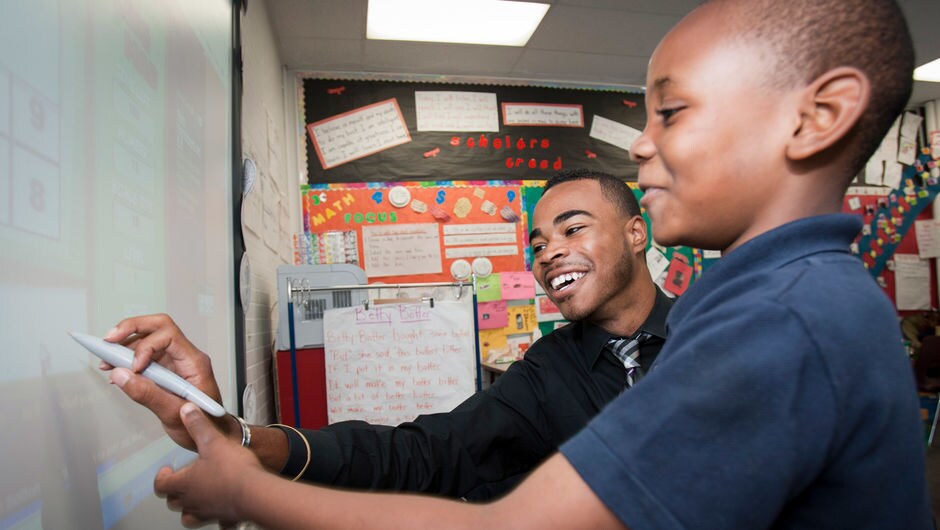
Download Our Free Guide for Career Changers
By signing up you agree to our Terms of Use and Privacy Policy.
Our free guide offers tips on how to make the leap from the corporate world to public service. Featuring real-life stories from people who have successfully made the transition and found purpose in life, while following their passion. Download our exclusive guide and get advice on:
- Discovering your career passion
- How to launch your job search
- Finding a mentor
- Preparing your resume
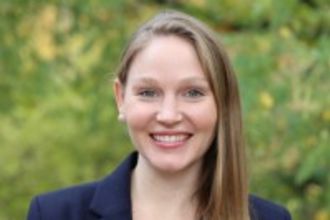
“My background in finance, accounting, and economics gave me a tangible way to connect math to important real-life skills (like budgeting), but it also provided a way to teach students about potential career opportunities that require math.”
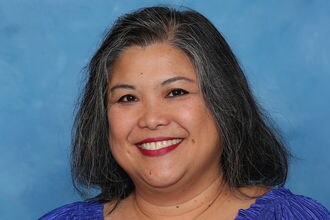
“When I was a classroom teacher, I inspired my students to strive towards college. Now, I aid university coaches in recruiting student-athletes and support our students in their push through college to graduation and beyond.”

Thanks for signing up!
Check your inbox for a welcome email and make sure to confirm your subscription!
Log in
Select your program to continue.
Are you a staff member? Continue here