5 Benefits of AI in the Classroom
From helping a student finally crack a tough math problem to turning a history lesson into something a classroom full of middle schoolers are actually interested in, the impact of AI in education is real. So are the questions.
As artificial intelligence is reshaping how we all work, communicate, and learn, teachers are figuring out what that means for their students and how they approach their profession. And as educators consider the pros and cons, one thing stands out: AI’s value isn’t about what it can do. It’s about how we choose to use it.
At Teach For America, we believe technology should support the human relationships, creativity, and critical thinking that make great teaching possible. Here are five ways AI can help teachers create more meaningful learning.
1. Make Learning More Personal with AI in Education
Every student walks into the classroom with their own strengths, interests, and learning style. Meeting those needs is arguably one of the most fulfilling opportunities for a teacher, and if we’re honest, it’s also one of the biggest challenges.
AI can help teachers meet more kids where they are by helping adapt lesson plans to each student’s unique learning style and level of understanding. For example, when teaching a complex scientific concept, AI may help break it down with a simplified explanation for one student, provide a visual snapshot for another, or create a set of increasingly challenging practice questions for those students who are ready to go deeper.
Try it in your classroom:
Use one of your district’s approved AI tools to generate three versions of a reading passage at different complexity levels, all focused on the same mastery outcome.
2. Bring Lessons to Life with AI-Powered Visual Aids
When students can see something for themselves, that’s when believing—and learning happens. AI-powered tools can help teachers create everything from diagrams to timelines that make abstract concepts easier to understand.
Imagine illustrating the Earth’s layers so that it perfectly aligns with your talking points. Or, dynamically mapping the events of a historical movement as it made its way across the globe. These tools can be true gamechangers for students who are visual learners, and especially useful in elementary education, where images and visual depictions can help young minds connect new ideas to familiar experiences.
Try it in your classroom
Ask an AI tool to help design a visual timeline of an important historical event or generate an illustration that demonstrates a specific scientific process.
When students are taught how to look at these visuals critically, they’re not just taking in information; they’re learning to question, interpret, and connect the dots.
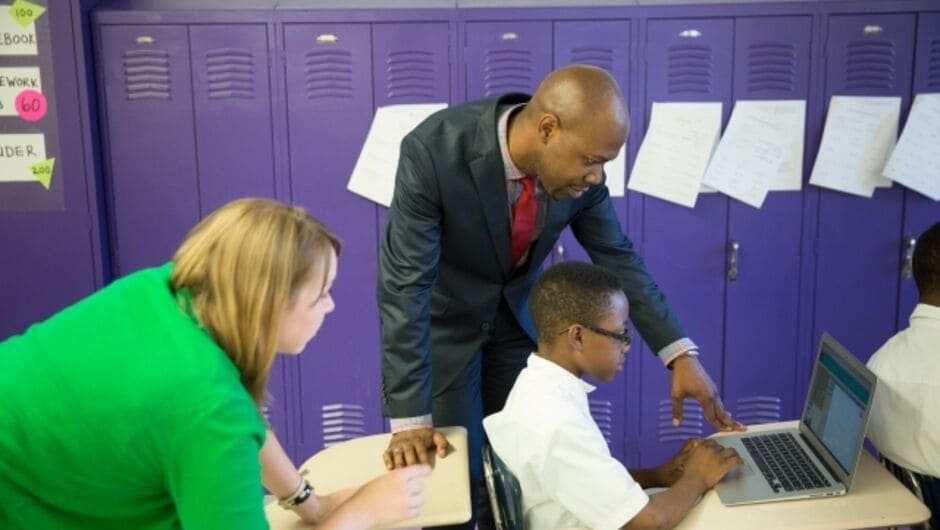
3. Make Classroom Learning More Interactive with AI Games
Teachers know that the right activities can spark curiosity, encourage collaboration, and give students a chance to put what they’ve learned to the test. From quizzes and vocabulary games to classroom-generated choose-your-own-adventure stories, AI can help teachers turn everyday lessons into interactive experiences that foster deeper student engagement and participation.
Instead of spending hours developing a classroom game from scratch, teachers can use AI to help brainstorm challenges, generate questions, and adapt ideas they’ve used in the past into effective activities for the students they have now.
Try it in your classroom:
Prompt AI to convert your current unit into a quiz game or to create a who-done-it mystery puzzle where students use clues to identify an important figure or event.
4. AI Gives Teachers More Time for What Matters
Hours filled with lesson planning, exit tickets, daily grading, and material prepping. That’s just the start of what’s pulling at the attention of teachers every day. Many of them have found that’s exactly where AI can help lighten their workload.
In fact, a Teach For America survey of more than 3,400 early-career educators found that approximately three-quarters of those surveyed said they use AI at least occasionally. More than 60% reported that AI helps reduce their workload, while nearly half said it lowers their stress or mental effort.
These teachers have found they can use AI to brainstorm lesson plans, draft classroom activities, develop rubrics, and adapt existing materials, all while maintaining responsibility for the quality of their classroom experience and accuracy of their students’ mastery.
The time saved gives teachers more space for what technology can’t do: getting to know students, spotting their potential, and building relationships to help them thrive.
Try it in your classroom:
Use AI to generate an outline for a lesson and set of practice questions aligned to the learning objective.
5. Build Critical Thinking and AI Literacy for the Future
Today’s students aren’t just growing up with AI. They’re growing up in a world where using it thoughtfully is a skill they’ll need. That makes AI literacy a chance to teach something bigger than how to use the technology alone.
When students use critical thinking to question AI-generated answers, learn to recognize bias, verify information, and consider the ethical consequences of technology, they’re practicing skills that stretch far beyond the classroom.
For older students, a school-approved AI chatbot might serve as a practice partner, offering hints or prompts to approach new material from a different perspective rather than simply providing answers. Students can then evaluate the chatbot’s responses, identify errors, and explain their own thinking and reasoning. At the end of the day, the lesson they’ll learn is that AI can give you an answer. But deciding whether it’s accurate, fair, or even useful still takes a human, and skills worth developing.
Try it in your classroom:
Provide students with an AI-generated explanation of a topic they’ve studied. Challenge them to fact-check its claims, identify missing information, and revise the response using credible sources.
What About the Disadvantages of AI in Education?
Talking about AI’s benefits means taking its limits seriously, too. AI tools can hallucinate—generating inaccurate information—as well as reproduce bias and raise important questions about student privacy and information security. Overdependence can also undermine the independent critical thinking and problem-solving skills that every student needs to develop.
Responsible use in the classroom starts with clear learning goals, the right safeguards, and educators who know when AI adds real value, and when it doesn’t. That means taking measures to protect student information, using only district-approved tools, checking AI-created content for accuracy and bias, and being diligent about ensuring students keep doing the thinking, creating, and learning themselves. It also means recognizing that not every student has the same access to technology. Thoughtful AI use should help open doors, not widen gaps.
“AI is evolving rapidly. But the reality is that teachers and students are using it right now. So we’re not sitting on the sidelines. Teach For America does not pretend to have all the answers, but we do believe that, under the right conditions, thoughtful use of AI can offer benefits for educators and students. That’s why we are leaning in. We're actively testing, learning, evaluating, and improving alongside educators to ensure that teachers are better prepared and supported.”
As Teach For America’s research shows, the question isn’t whether teachers will use AI. It’s how they’ll use it to strengthen student learning while keeping their professional judgement and relationships that make great teaching possible.
The Future of AI in Education Starts with Educators
AI will keep evolving. So will the opportunities and challenges it brings to the future of education. But one thing won’t change: Great teaching starts with great teachers.
Teaching is deeply human work. It requires those who can not only spot a student’s potential or know how to turn an ordinary lesson into the moment something finally clicks. But also those who know how to push, when to encourage, and when to simply listen to kids who need to feel seen and heard. AI can help create space for more of these moments of connection and deeper, more impactful classroom relationships. But it’s educators themselves who make those moments matter.
Ready to see what AI can make possible in the classroom? Build your AI toolkit and find ways to put technology to work for student learning.